Self-Agency Dissociation Syndrome (SADS) is a psychiatric condition characterized by a persistent disruption in the subjective experience of agency, in which individuals retain intact cognition, perception, and reality testing but feel alienated from their own actions and decisions. Unlike classical dissociative disorders, SADS does not involve amnesia, identity fragmentation, or depersonalization in the traditional sense. The primary disturbance lies in the phenomenology of selfhood: the individual performs, plans, and reasons as usual but experiences these processes as subtly, yet persistently, externalized.
Individuals with SADS maintain full awareness of their thoughts, choices, and bodily movements, yet these mental and physical acts are accompanied by a diminished sense of ownership. Actions feel like they are happening “through” the self rather than “by” the self. This can create a persistent internal tension, in which cognition and behavior are logically coherent but experientially disconnected. Unlike psychotic conditions, insight is preserved: the affected person recognizes the incongruity between their mental processes and their felt agency, and reality testing remains intact.
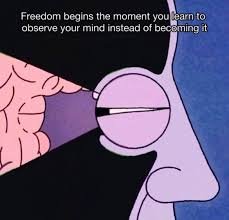
The disorder primarily affects spontaneous cognition and automatic behaviors. Purposeful, effortful thinking—such as problem-solving, planning, or analytical reasoning—remains possible, yet unprompted thoughts and habitual actions are experienced with a subtle estrangement. Individuals often describe the sensation as watching their own mind from behind a veil, or as though their mental processes are being executed by an external observer. This perceptual split does not impair objective performance but introduces a continuous, underlying sense of cognitive distance.
Emotionally, SADS produces secondary effects rather than primary affective pathology. Individuals may experience mild anxiety, frustration, or unease as a consequence of the perceived disconnection from their own thoughts and actions. Emotions themselves remain intact: happiness, sadness, curiosity, and concern are all accessible, yet they often feel detached from the immediacy of the cognitive or behavioral events that elicit them. This temporal dissociation between cognition and affect contributes to the chronic sense of internal estrangement.
Memory and autobiographical identity remain coherent and accurate. Individuals retain detailed personal histories, coherent life narratives, and the ability to articulate values and goals. However, because agency is felt as attenuated, these memories may seem like descriptions of a “past self” rather than lived experiences. The present self observes actions and recollections rather than inhabiting them fully, producing a subtle but pervasive feeling of self-discontinuity.
Neurocognitive hypotheses suggest that SADS involves dysregulation in neural circuits responsible for self-referential processing and motor-intentional integration. Prefrontal, parietal, and supplementary motor areas typically collaborate to ensure that voluntary actions are accompanied by a coherent sense of authorship. In SADS, this coupling appears weakened: executive and motor functions operate correctly, but the experiential signal marking actions as self-generated is attenuated. Functional imaging studies have shown altered connectivity in networks associated with the sense of agency, supporting this theoretical model.
Behavioral adaptations are common among affected individuals. Many rely on externalizing strategies to recapture a sense of ownership: writing thoughts down, speaking aloud, or creating structured task sequences. These methods temporarily restore cognitive agency by transforming abstract mental content into tangible, observable action. Attempts to forcibly suppress the estrangement or hyper-focus on controlling every thought often backfire, intensifying the perceived separation between self and cognition.
SADS is frequently misdiagnosed as depersonalization disorder, obsessive-compulsive disorder, or subclinical dissociation. The distinctions are subtle but clinically meaningful. Unlike depersonalization, the self is not experienced as unreal or absent; the world is not perceived as distorted or artificial. Unlike OCD, repetitive behaviors and thoughts are not inherently anxiety-driven or ritualized. The defining feature is the persistent, selective disruption of the felt sense of agency across both cognition and behavior.
Pharmacological interventions have been explored, including serotonergic agents and compounds affecting prefrontal executive networks, but results remain inconsistent. The phenomenological nature of the disorder suggests that cognitive and behavioral therapies are more promising. Approaches emphasizing mindfulness, embodiment, and adaptive externalization—practices that focus attention on immediate bodily and environmental cues—have demonstrated subjective benefits. Patients learn to accept the partial loss of agency without attempting futile suppression and to use external scaffolding to restore a coherent sense of authorship.
The disorder also affects social and occupational functioning in subtle ways. Interruptions in spontaneous thought, habitual action, and the feeling of decision-making can interfere with interpersonal interactions, professional tasks, and multitasking. Although externally the individual may appear fully competent and engaged, the internal experience is one of constant negotiation between intentional control and involuntary estrangement. Over time, this internal tension can contribute to fatigue, reduced motivation, and subtle anxiety about perceived reliability in social and professional contexts.
Emotion regulation, while intact, may be temporally misaligned with action. For instance, an individual may recognize an emotionally salient event cognitively before the affective response fully aligns with the context. While not pathological in itself, this disjunction reinforces the sense of being partially detached from one’s own mental life.
SADS challenges foundational assumptions about cognition and selfhood in psychiatry. It demonstrates that intact reasoning, memory, and perception do not guarantee the experience of being the agent of one’s own mind. Even highly intelligent, fully functional individuals may experience profound disruptions in subjective agency. The disorder illustrates that the phenomenology of selfhood—the felt sense of being the initiator of thought and action—is a fragile dimension of consciousness that can deteriorate independently of other cognitive faculties.
In conclusion, Self-Agency Dissociation Syndrome represents a distinct psychiatric phenomenon in which voluntary cognitive and behavioral functions remain intact, yet subjective ownership of thought and action is attenuated. The condition produces a persistent internal tension between cognitive execution and experiential agency, resulting in subtle functional strain, emotional dissonance, and existential unease. Therapeutic strategies that integrate mindfulness, external scaffolding, and embodied awareness provide the most effective means of mitigating distress and partially restoring a coherent sense of self. SADS underscores the critical importance of the experiential aspect of agency, revealing that cognition and action alone are insufficient for the lived experience of being the author of one’s own mind.