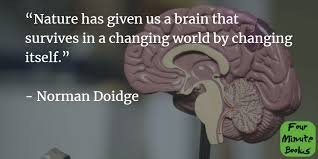
Can deliberate thought reshape the physical structure of the brain, or are neural pathways fixed once development is complete? For much of scientific history, the prevailing assumption held that the adult brain was largely static. According to this earlier view, neurons that were damaged could not regenerate, and neural circuits established during childhood remained fundamentally unchanged throughout life. However, advances in neuroscience during the late twentieth and early twenty-first centuries have radically transformed this perspective. The concept of neuroplasticity—the brain’s capacity to reorganize its structure and function in response to experience—has become one of the most significant discoveries in modern cognitive science. Within this framework emerges a deeper question: can intentional mental activity, such as focused attention, reflection, or meditation, actively reshape the brain itself?
The human brain is composed of approximately eighty-six billion neurons interconnected through trillions of synaptic connections. These connections are not static. They strengthen, weaken, and reorganize depending on patterns of activity. When particular neural pathways are repeatedly activated, the synapses connecting those neurons become more efficient through processes such as long-term potentiation. Conversely, pathways that are rarely used may weaken or disappear. This dynamic process reflects the brain’s fundamental principle: structure follows activity.
Experience plays a central role in shaping neural architecture. Learning a new language, practicing a musical instrument, or mastering a complex skill results in measurable structural changes within relevant brain regions. For instance, musicians often exhibit enlarged cortical representations associated with fine motor control and auditory processing. Similarly, individuals who engage in intensive spatial navigation, such as taxi drivers navigating complex urban environments, show increased hippocampal volume associated with spatial memory. These findings demonstrate that repeated behavioral experience modifies neural organization.
Yet behavioral experience is not limited to physical actions. Thought itself represents a form of neural activity. When individuals focus attention, rehearse memories, or imagine future scenarios, specific neural circuits become active. Over time, repeated patterns of mental activity may strengthen the underlying neural pathways. In this sense, the boundary between thought and behavior becomes blurred; both involve patterns of neural firing capable of reshaping the brain.
Meditation research provides some of the most compelling evidence supporting the capacity of thought to alter neural structure. Long-term practitioners of mindfulness and contemplative meditation display measurable differences in brain regions associated with attention regulation, emotional processing, and self-awareness. Neuroimaging studies have shown increased cortical thickness in areas of the prefrontal cortex and anterior cingulate cortex among experienced meditators. These regions are associated with executive control and emotional regulation. The repeated practice of directing attention inward appears to strengthen networks responsible for monitoring and regulating mental states.
Furthermore, meditation has been associated with changes in the amygdala, a structure involved in fear and stress responses. Individuals who engage in sustained contemplative practice often show reduced amygdala activation in response to emotional stimuli, suggesting enhanced emotional regulation. These findings imply that intentional cognitive practices can reshape neural circuits related to emotional reactivity. Rather than being passive recipients of neural processes, individuals may participate in shaping those processes through disciplined mental training.
Cognitive behavioral therapy (CBT) offers another example of thought influencing neural architecture. CBT encourages individuals to identify and modify maladaptive patterns of thinking that contribute to anxiety, depression, or other psychological disorders. Neuroimaging studies indicate that successful therapy correlates with changes in brain activity within circuits involving the prefrontal cortex and limbic system. As patients learn to reinterpret negative experiences and challenge automatic thoughts, neural patterns associated with emotional regulation appear to shift. These findings suggest that cognitive restructuring—the deliberate modification of thought patterns—can produce measurable biological effects.
The mechanism underlying these changes involves synaptic plasticity. When particular thoughts are repeated, the neurons participating in those thought patterns fire together repeatedly. According to Hebbian theory, neurons that fire together wire together. Over time, these repeated activations strengthen the synaptic connections linking them. Thus, habitual thought patterns—whether constructive or destructive—can gradually sculpt neural architecture.
This principle carries important implications for mental health. Persistent negative rumination may reinforce neural circuits associated with anxiety or depressive thinking. Conversely, practices that cultivate gratitude, compassion, or positive reinterpretation may strengthen alternative networks promoting resilience and emotional balance. While such changes do not occur instantly, consistent mental practice can gradually alter the probability of certain patterns of thought arising spontaneously.
Attention plays a particularly crucial role in this process. The brain allocates resources preferentially to stimuli receiving focused attention. When attention is directed toward specific experiences, the neural representations associated with those experiences become more strongly encoded. In effect, attention acts as a gatekeeper determining which neural pathways are reinforced. Practices that cultivate sustained attention—such as mindfulness meditation—may therefore enhance the brain’s capacity for self-directed plasticity.
The role of imagination further illustrates the power of thought. Studies have shown that mentally rehearsing a physical action can activate neural circuits similar to those involved in performing the action itself. Athletes often use visualization techniques to improve performance, mentally practicing movements before executing them physically. Neuroimaging reveals that such visualization engages motor planning regions of the brain, reinforcing neural pathways associated with the imagined activity. Over time, this mental rehearsal can improve real-world performance.
However, the capacity of thought to reshape the brain is not unlimited. Biological constraints still apply. Genetic factors influence neural development, and certain structural changes require extended periods of consistent practice. Moreover, the brain’s plasticity varies across the lifespan. During early childhood, neural circuits are especially malleable. As individuals age, plasticity decreases, though it never disappears entirely. Even in later adulthood, learning and mental training can induce measurable neural changes.
Another important limitation concerns the difference between short-term neural activation and long-term structural change. A single episode of focused thought may temporarily activate certain neural circuits, but lasting structural modification typically requires repeated practice over extended periods. Neuroplasticity is cumulative rather than instantaneous. The brain adapts gradually as patterns of activity become habitual.
Emerging research also explores how emotional states interact with neuroplasticity. Positive emotional engagement appears to facilitate learning and neural adaptation, whereas chronic stress may impair it. Stress hormones such as cortisol can disrupt synaptic plasticity in regions like the hippocampus. Consequently, mental practices that reduce stress may indirectly enhance the brain’s capacity for change.
From a philosophical perspective, the possibility that thought can alter the brain challenges traditional distinctions between mind and matter. If intentional mental activity modifies neural structure, then the mind is not merely an epiphenomenon arising from the brain; it participates in shaping its own biological substrate. This reciprocal relationship suggests a dynamic feedback loop: neural activity generates thought, and thought influences neural organization.
Such a perspective does not imply that the mind operates independently of the brain. Rather, it highlights the inseparability of mental and neural processes. Thoughts are patterns of neural activity, yet those patterns can reinforce or reorganize the networks that produce them. The brain becomes both the source and the product of mental life.
This insight carries practical implications for education, therapy, and personal development. If consistent patterns of thought influence neural architecture, then deliberate mental training may cultivate cognitive capacities such as attention, emotional regulation, and empathy. Educational systems increasingly explore methods that encourage reflective thinking and mindfulness to enhance learning outcomes. Similarly, therapeutic approaches emphasize cognitive awareness as a pathway toward psychological transformation.
However, caution remains necessary. Popular interpretations of neuroplasticity sometimes exaggerate the degree of control individuals possess over their brains. Structural change requires sustained effort, and not all mental conditions can be resolved through thought alone. Biological, environmental, and social factors continue to exert powerful influences on mental health and cognitive function.
Nevertheless, the recognition that thought participates in shaping neural structure represents a profound shift in scientific understanding. The brain is not merely a fixed organ determining mental life; it is a dynamic system continuously shaped by experience, attention, and reflection. Each repeated pattern of thought leaves subtle traces within neural networks, gradually influencing how the brain processes future experiences.
Can the brain change itself through thought? The growing body of neuroscientific evidence suggests that it can. Through mechanisms of neuroplasticity, intentional mental activity contributes to the ongoing reorganization of neural circuits. The process is gradual, constrained, and deeply intertwined with biological conditions, yet it remains one of the most remarkable features of the human brain. In learning to direct attention and reshape patterns of thinking, individuals participate—however modestly—in the continual construction of their own neural architecture.