What does it truly mean for a civilization to move forward, and who decides whether that movement deserves to be called progress? For centuries, societies have measured advancement through expansion—more production, more consumption, more speed, more technological power. Skyscrapers replace forests, highways cut through mountains, data travels faster than thought, and economies celebrate quarterly growth as evidence of success. Yet beneath this narrative of perpetual expansion lies an increasingly urgent question: does growth automatically equal improvement, or have we confused acceleration with advancement?
The idea of progress has long been intertwined with material development. The Industrial Revolution transformed agrarian societies into manufacturing powerhouses. Machines amplified human labor, cities flourished, and scientific discoveries reshaped daily life. Electricity extended productive hours, transportation shrank distances, and medicine reduced mortality rates. These achievements undeniably improved quality of life in measurable ways. Life expectancy increased, literacy spread, and communication expanded beyond imagination. Progress appeared visible, tangible, and quantifiable.
However, as the pace of development intensified, its side effects became more apparent. Environmental degradation, social inequality, and psychological strain emerged as companions to industrial and technological triumph. Forests diminished, oceans absorbed waste, and air thickened with pollution. Urban centers, symbols of opportunity, also became sites of overcrowding and alienation. Economic growth often concentrated wealth unevenly, amplifying disparities between regions and classes. The promise of universal prosperity remained unevenly fulfilled.
Modern economies rely heavily on the principle of continuous growth. Gross Domestic Product functions as a central indicator of national success. Governments pursue policies designed to stimulate consumption and investment. Corporations aim for ever-increasing profits to satisfy shareholders. Within this framework, stagnation is perceived as failure. Yet infinite growth within finite ecological boundaries presents an obvious contradiction. Resources such as freshwater, fertile soil, and fossil fuels are not inexhaustible. The tension between economic ambition and environmental sustainability intensifies each year.
Technological innovation complicates this discussion further. Digital economies generate value less dependent on physical extraction. Software, data, and intellectual property appear less resource-intensive than traditional manufacturing. Nevertheless, digital infrastructure requires energy, rare minerals, and vast data centers. The invisible cloud rests upon tangible foundations. While technology offers solutions—renewable energy systems, efficient logistics, precision agriculture—it also accelerates consumption patterns. Convenience fuels demand.
Culturally, the narrative of progress shapes individual aspiration. From early education onward, children are encouraged to “achieve more,” “be better,” and “move ahead.” Competition becomes normalized. Success is often defined comparatively rather than intrinsically. This mindset can foster innovation and ambition, yet it can also cultivate chronic dissatisfaction. If progress means constant upward movement, contentment risks being labeled complacency. The human psyche, however, requires balance. Endless striving without reflection can erode well-being.
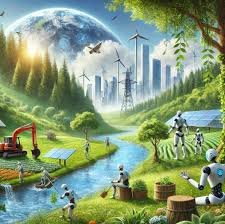
The environmental crisis challenges traditional definitions of advancement. Climate change, biodiversity loss, and extreme weather events signal systemic imbalance. Scientific consensus emphasizes the urgency of reducing carbon emissions and rethinking consumption habits. Transitioning toward renewable energy, circular economies, and sustainable agriculture represents not regression but adaptive evolution. Redefining progress may require shifting from quantity to quality—prioritizing resilience, equity, and ecological harmony over sheer output.
Social progress offers another dimension. Advances in civil rights, gender equality, and access to education demonstrate that progress is not solely material. Legal reforms and cultural shifts have expanded freedoms in many societies. Yet backlash and polarization reveal that progress is neither linear nor guaranteed. Gains can be challenged, reversed, or unevenly distributed. Social advancement depends on sustained civic engagement and institutional accountability.
Psychological research introduces further complexity. Studies indicate that beyond a certain threshold, increases in income have diminishing returns on happiness. Basic needs—food, shelter, security—are foundational. Once satisfied, additional wealth contributes less dramatically to life satisfaction. Relationships, purpose, and autonomy emerge as stronger predictors of well-being. If societies pursue growth primarily to enhance happiness, evidence suggests that material expansion alone is insufficient.
Urban design illustrates the tension between growth and livability. Expanding cities often prioritize commercial development and traffic flow. Yet residents increasingly advocate for green spaces, walkable neighborhoods, and community-oriented planning. Metrics of success evolve from sheer population density to quality of public life. Cities experimenting with sustainable transport and inclusive housing demonstrate alternative models of progress grounded in human experience rather than scale alone.
Education systems also face reconsideration. Traditional models emphasize standardized achievement and preparation for economic productivity. Emerging perspectives advocate holistic development—critical thinking, emotional intelligence, ethical reasoning. Preparing students not merely to compete but to collaborate and innovate responsibly reflects a broader understanding of advancement. Progress in education may lie not in test scores alone but in cultivating adaptable, compassionate citizens.
Globalization further complicates definitions of progress. International trade has lifted millions out of poverty and facilitated cultural exchange. Simultaneously, it has exposed vulnerabilities in supply chains and intensified labor exploitation in certain regions. Economic interdependence means that growth in one nation may rely on resource extraction or low-wage labor elsewhere. Ethical progress demands transparency and equitable distribution of benefits.
The concept of degrowth has entered academic and policy discussions as a provocative alternative. Rather than pursuing perpetual expansion, proponents argue for stabilizing or reducing production in wealthy nations to achieve ecological balance and social equity. Critics fear economic contraction and instability. The debate underscores a central tension: whether prosperity can be decoupled from expansion or whether structural transformation is necessary.
Technological optimism persists. Advocates argue that innovation will solve environmental challenges through breakthroughs in clean energy, carbon capture, and sustainable materials. History supports the transformative power of ingenuity. Yet reliance on future solutions may delay present action. Balancing optimism with precaution becomes essential. Progress cannot rely solely on hypothetical advancements while ignoring immediate responsibility.
Cultural narratives influence public willingness to redefine success. Stories of heroic entrepreneurs and rapid expansion dominate media. Slower, community-centered achievements receive less attention. Shifting perception requires amplifying alternative role models—leaders who prioritize sustainability, equity, and long-term resilience. When cultural admiration broadens beyond accumulation, collective values may evolve.
Economic indicators beyond GDP gain traction. Measures such as the Human Development Index, Gross National Happiness, and sustainability metrics attempt to capture multidimensional well-being. These frameworks recognize that education quality, health outcomes, environmental integrity, and social trust contribute to genuine progress. Integrating such indicators into policymaking could recalibrate priorities.
Individual choices aggregate into systemic impact. Consumption habits, voting behavior, career paths—all influence collective direction. While structural forces shape options, agency remains meaningful. Conscious consumerism, civic participation, and ethical entrepreneurship demonstrate that progress can be reimagined at multiple scales. Personal fulfillment aligned with societal benefit embodies a more integrated model of advancement.
Philosophically, redefining progress challenges fundamental assumptions about human nature. Are we inherently driven toward expansion, or can satisfaction coexist with sufficiency? Evolutionary psychology suggests survival instincts favor accumulation and security. Cultural evolution, however, allows reflective adaptation. Humans can evaluate impulses and construct norms that balance ambition with restraint.
The arts provide insight into alternative visions. Literature and cinema often explore dystopian futures shaped by unchecked growth, as well as utopian possibilities rooted in harmony. These narratives function as collective imagination exercises, prompting reflection on current trajectories. Creativity becomes a laboratory for societal experimentation.
Intergenerational responsibility introduces moral urgency. Decisions made today shape environmental and economic conditions for future populations. Redefining progress involves acknowledging obligations beyond present convenience. Sustainable infrastructure, education reform, and climate mitigation represent investments in continuity rather than immediate gain.
Technology may assist in measurement and transparency. Advanced data analytics can track environmental impact and social inequality with precision. Open information empowers citizens to hold institutions accountable. However, data alone does not guarantee change. Interpretation and political will remain decisive.
Resilience emerges as a compelling metric of progress. Systems capable of withstanding shocks—whether pandemics, economic crises, or climate events—demonstrate deeper strength than those optimized solely for efficiency. The COVID-19 pandemic exposed vulnerabilities in healthcare, supply chains, and labor markets. Recovery strategies emphasizing adaptability and equity reflect lessons learned.
Ultimately, redefining progress requires cultural introspection. It demands asking whether existing models serve human flourishing or perpetuate imbalance. Growth has delivered undeniable benefits, yet its unchecked pursuit reveals limitations. Advancement may need recalibration from relentless expansion to sustainable enrichment.
Humanity stands at a crossroads shaped by unprecedented capability. Scientific knowledge, technological tools, and global communication offer means to redesign systems intentionally. Whether these capacities reinforce existing patterns or enable transformative change depends on collective imagination and courage.
Progress need not be abandoned; it must be reinterpreted. Instead of equating success solely with magnitude, societies might value depth—depth of well-being, connection, and ecological harmony. Instead of celebrating speed alone, they might honor sustainability. Instead of prioritizing accumulation, they might emphasize distribution and dignity.
The question is not whether humanity can innovate; history confirms that it can. The deeper inquiry concerns direction. Will innovation amplify extraction and inequality, or will it foster regeneration and justice? Can economies thrive within ecological boundaries? Can ambition align with stewardship?
Answering these questions requires more than policy adjustments. It calls for narrative transformation. When collective imagination shifts, institutions follow. If citizens demand multidimensional progress, leaders adapt. If education fosters systems thinking, future generations approach complexity with nuance.
Human civilization has redefined itself repeatedly—transitioning from hunter-gatherer societies to agrarian communities, from monarchies to democracies, from analog to digital eras. Each transformation involved tension, resistance, and eventual adaptation. The present moment may represent another inflection point.
Progress, ultimately, is not a destination but a direction. It reflects values translated into systems. By reassessing those values—prioritizing sustainability, equity, and well-being—humanity can chart a path that honors both innovation and responsibility. Endless growth need not remain the sole compass. A richer, more balanced conception of advancement awaits articulation and action.