Human consciousness possesses a remarkable capacity for reflection. Unlike many other biological processes, awareness can turn inward and observe its own activity. Thoughts can be examined, emotions can be questioned, and beliefs can be reconsidered. Because of this ability, people often assume that the mind is capable of eventually understanding itself completely. Yet the deeper this assumption is explored, the more uncertain it becomes. If awareness is both the observer and the observed, can it ever fully know itself?
The experience of self-reflection gives the impression that such knowledge should be possible. Individuals regularly examine their motives, analyze their emotions, and attempt to understand why they behave in particular ways. Entire disciplines of psychology, philosophy, and neuroscience are devoted to investigating the mechanisms of thought and experience. Despite this extensive effort, however, the structure of consciousness continues to resist final explanation.
Part of this difficulty arises from the nature of awareness itself. When people attempt to observe their own thoughts, they often discover that the act of observation changes what is being observed. A thought that is examined may dissolve or transform as attention shifts toward it. The process resembles attempting to hold water in one’s hands: the more tightly one grasps it, the more it slips away.
This instability suggests that consciousness may not be a static object that can be inspected in isolation. Instead, it appears to function as a dynamic process that unfolds continuously over time. Each moment of awareness emerges from the interaction of perception, memory, emotion, and expectation. By the time a person reflects on a thought or feeling, that mental event has already passed.
The temporal nature of experience complicates self-knowledge. Awareness operates in the present moment, yet understanding often requires reflection on events that have already occurred. This means that the mind is always analyzing a slightly outdated version of itself. The observer is never perfectly synchronized with the process being observed.
Memory plays a crucial role in bridging this gap, but memory itself is imperfect. When individuals recall a thought or emotion, they reconstruct it using fragments of the original experience combined with current interpretations. As a result, the remembered version may differ subtly from what was initially experienced.
This reconstruction introduces uncertainty into the process of self-understanding. People may feel confident that they remember their motivations or reactions accurately, yet the narrative they construct may reflect present beliefs rather than past realities. The mind therefore attempts to know itself through tools that are inherently flexible and interpretive.
Another factor that complicates self-knowledge is the layered structure of cognition. Many mental processes operate below the level of conscious awareness. Perception, emotional evaluation, and decision-making often involve rapid neural activity that occurs before conscious thought emerges.
Because these processes are hidden from direct observation, individuals experience only their outcomes. A person may suddenly feel attraction, fear, or dislike without immediately understanding the underlying causes. Conscious reflection may attempt to explain these reactions, but the explanations often rely on assumptions rather than direct insight.
The existence of unconscious processing raises an important question: if a significant portion of mental activity occurs outside awareness, can consciousness ever fully understand the system that produces it? The observer may have access to certain signals but not to the deeper mechanisms that generate them.
Language further shapes the limits of self-understanding. Human thought is deeply intertwined with linguistic structures. Words allow individuals to categorize experiences, describe emotions, and construct narratives about their lives. However, language also simplifies complex phenomena by fitting them into predefined categories.
For example, an individual might describe an emotional state as anxiety or sadness, yet these labels may represent intricate patterns of physiological and psychological activity. The label provides clarity and communicative efficiency, but it does not capture the full complexity of the underlying experience.
As a result, language can create the illusion of understanding. When people assign a name to a mental state, they may feel that they have explained it. In reality, the label often serves as a starting point for inquiry rather than a complete explanation.
Social influences also shape the process of self-knowledge. Human identity develops through interaction with others. From early childhood onward, individuals receive feedback about their behavior, abilities, and personality traits. These external perspectives gradually become part of the internal narrative of the self.
Because of this process, self-understanding often incorporates assumptions about how others perceive us. People may interpret their own actions through the imagined judgments of family members, peers, or cultural norms. This internalization can provide valuable guidance, but it may also obscure personal motivations that do not align with social expectations.
The interplay between internal experience and social interpretation creates additional complexity. An individual may struggle to distinguish between beliefs that arise from personal reflection and those that originate from external influence. The boundary between authentic self-understanding and socially shaped identity can become difficult to identify.
Emotion introduces another layer of complexity. Emotional states influence how individuals interpret their experiences and their memories. When people feel confident and optimistic, they may perceive their actions as intentional and meaningful. When they feel uncertain or distressed, the same actions may appear misguided or inconsistent.
These emotional shifts illustrate that self-understanding is not purely intellectual. It is deeply influenced by mood, physiological states, and environmental conditions. As these factors change, the interpretation of one’s own behavior may also change.
Despite these limitations, humans continue to pursue greater insight into their own minds. Reflection, introspection, and psychological inquiry are deeply rooted aspects of human culture. This persistent curiosity suggests that self-understanding serves important psychological functions, even if complete knowledge remains unattainable.
One function of reflection is the organization of experience. By examining thoughts and emotions, individuals can identify patterns that might otherwise remain unnoticed. Recognizing these patterns allows people to adjust their behavior and make more deliberate choices.
For instance, someone might notice that certain situations consistently trigger feelings of frustration or insecurity. By identifying this pattern, the individual can begin to explore its origins and consider alternative responses. Even if the deeper causes remain partially hidden, the recognition of the pattern itself can promote change.
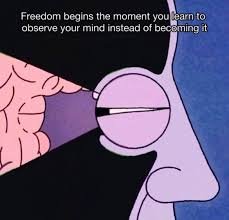
Mindfulness practices provide another method for exploring consciousness. Rather than analyzing thoughts in detail, mindfulness encourages individuals to observe mental activity as it unfolds. Thoughts, emotions, and sensations are noticed without immediate judgment or interpretation.
This observational approach can reveal how quickly the mind generates interpretations and narratives. A single sensory experience may trigger a cascade of associations, memories, and evaluations. By witnessing this process directly, individuals gain insight into the fluid and reactive nature of consciousness.
However, mindfulness also demonstrates the limits of observation. Even when attention is focused carefully on present experience, certain processes remain elusive. Thoughts appear and disappear rapidly, and the deeper neural activity that supports them remains inaccessible to direct awareness.
Philosophical traditions have long debated whether complete self-knowledge is theoretically possible. Some perspectives suggest that consciousness will always encounter limits when attempting to examine itself. Just as a mirror cannot fully reflect itself without another mirror, awareness may require external perspectives to understand its own nature.
Scientific research offers additional insight into this question. Advances in neuroscience have revealed intricate networks within the brain that support perception, emotion, and decision-making. These discoveries provide valuable information about the biological foundations of consciousness.
Yet even detailed knowledge of neural activity does not fully explain subjective experience. The relationship between brain processes and conscious awareness remains one of the most complex questions in science. Understanding the mechanisms of cognition does not necessarily reveal why experience feels the way it does.
This gap between objective description and subjective experience highlights the uniqueness of consciousness. Awareness is not merely a collection of physical processes; it is also the lived experience of those processes. Attempting to fully understand consciousness therefore requires bridging two very different perspectives.
The pursuit of this understanding continues to inspire philosophical inquiry, psychological research, and personal reflection. Each approach contributes valuable insights, yet none has achieved a final explanation. Consciousness remains both the tool of investigation and the phenomenon being investigated.
Perhaps the most significant implication of this situation is that self-knowledge may be an ongoing process rather than a final achievement. Instead of reaching a point where the mind completely understands itself, individuals may gradually deepen their awareness through continuous reflection and experience.
This perspective transforms the question Can awareness ever fully know itself? from a problem to be solved into an exploration to be sustained. The absence of a definitive answer does not diminish the value of the inquiry. On the contrary, it reveals the extraordinary complexity of the human mind.
The mind’s attempts to understand itself may never produce absolute certainty, yet they can cultivate insight, flexibility, and humility. Each new realization expands the horizon of awareness while revealing additional questions that remain unexplored.
In this sense, the search for self-knowledge becomes part of the experience of being conscious. Awareness may not be able to grasp itself completely, but through the very act of inquiry it continues to evolve, adapting to new perspectives and possibilities.
Thus the paradox remains: consciousness seeks to understand itself using the very processes it is trying to understand. The effort may never reach a final conclusion, yet it reveals something profound about the nature of human existence. The mind is not only capable of experiencing the world—it is capable of wondering about the mystery of its own awareness.