There are experiences in human psychology that remain largely invisible to the outside world, yet profoundly transform the internal life of the individual who undergoes them. Among the most unsettling of these experiences is the gradual emergence of fear directed not toward the external world, but toward one’s own mind. Unlike ordinary fear, which arises in response to identifiable dangers, this phenomenon originates within the very system responsible for perception, reasoning, and self-awareness. When the mind begins to regard its own processes as unpredictable or threatening, a unique form of psychological tension emerges—one that has fascinated scholars of psychopathology, philosophy, and neuroscience alike.
Human consciousness depends on a fundamental assumption: that the mind can trust itself. Individuals rely on their thoughts, perceptions, and interpretations to navigate reality. Even when uncertainty exists, the mind normally operates with an implicit confidence in its ability to evaluate experiences and generate reliable responses. This internal trust functions as a stabilizing principle within psychological life.
However, this assumption can weaken under certain circumstances. When individuals begin to experience their own mental activity as intrusive, uncontrollable, or unfamiliar, the relationship between the self and the mind becomes strained. Thoughts may appear unexpectedly, emotions may arise without clear explanation, and impulses may contradict the person’s intentions or values. Gradually, the individual may begin to question whether the mind is truly under their control.
Psychopathology frequently examines this state through the lens of intrusive cognition. Intrusive thoughts are spontaneous mental events that occur without deliberate intention and often contradict the individual’s beliefs or desires. Many people occasionally experience such thoughts—imagining accidental harm, questioning moral choices, or entertaining irrational fears. In most cases these thoughts pass quickly and are dismissed as meaningless mental noise.
Yet for some individuals, intrusive thoughts acquire a disturbing significance. Instead of being ignored, they are interpreted as evidence of hidden intentions or dangerous impulses. The person may begin to ask unsettling questions: Why did that thought appear? What does it say about me? Could I lose control and act on it? Through this process, the mind becomes both the source of fear and the object being feared.
One psychological mechanism contributing to this experience is hyper-reflexive self-awareness. Human beings possess the ability to observe their own mental processes, a capacity that enables reflection, self-correction, and ethical reasoning. However, when this self-monitoring becomes excessively intense, the mind may begin to scrutinize every thought and emotion as if searching for potential threats.
In such states, ordinary mental fluctuations are interpreted with heightened suspicion. A fleeting aggressive thought, a moment of doubt, or an unusual emotional reaction may be analyzed repeatedly. The more attention the individual directs toward these mental events, the more prominent they become within consciousness. What was initially a minor cognitive disturbance gradually expands into a central psychological concern.
This process is reinforced by the paradoxical effects of mental control. When individuals attempt to suppress unwanted thoughts, they often discover that the thoughts return with greater frequency. Cognitive research has demonstrated that deliberate attempts to avoid specific mental content can unintentionally increase its accessibility within memory. As the individual struggles to eliminate intrusive thoughts, they may appear even more persistent, reinforcing the belief that the mind has become uncontrollable.
Fear of the mind is therefore not simply fear of particular thoughts. It represents a broader uncertainty about the stability of consciousness itself. The individual begins to question whether their mental processes follow predictable rules or whether hidden forces operate beneath conscious awareness.
Another factor contributing to this phenomenon involves the disruption of the boundary between intention and impulse. In ordinary psychological functioning, individuals experience a clear distinction between thoughts that reflect their intentions and thoughts that appear spontaneously. This distinction allows them to disregard many mental events as irrelevant.
However, when anxiety intensifies, the boundary between intention and impulse may blur. The person may begin interpreting every thought as a potential signal of hidden motivation. An intrusive image or idea may be interpreted as evidence of suppressed desires, even when the individual finds the thought deeply disturbing.
This interpretive shift transforms the internal environment of the mind. Thoughts are no longer neutral mental events but possible indicators of dangerous tendencies. The mind becomes a territory requiring constant surveillance.
Psychopathology often associates this pattern with obsessive cognitive processes. Individuals experiencing obsessive thinking feel compelled to analyze, reinterpret, and neutralize disturbing thoughts. They may engage in mental rituals such as repeating phrases, reviewing memories, or constructing elaborate arguments designed to reassure themselves that they remain in control.
Although these strategies aim to restore certainty, they frequently intensify the problem. The more effort the individual invests in controlling the mind, the more attention is directed toward the mental events they wish to avoid. Gradually, the act of thinking itself becomes associated with anxiety.
The emotional consequences of fearing one’s own mind can be profound. Individuals may become reluctant to trust their spontaneous reactions, hesitating before making decisions or expressing opinions. They may question whether their perceptions accurately represent reality or whether hidden distortions influence their judgments.
In severe cases, this uncertainty can extend to the experience of agency—the sense that one is the author of one’s actions. When individuals feel disconnected from their own mental processes, they may experience moments in which thoughts seem to arise independently of the self. While they remain aware that these thoughts occur within their own consciousness, they may feel as though the thoughts are imposed rather than chosen.
Philosophers have long explored similar questions concerning the nature of consciousness and free will. The human mind generates a vast number of thoughts automatically, without deliberate effort. Language, memories, associations, and emotional reactions emerge through neural processes that operate largely outside conscious awareness. Recognizing this automatic dimension of cognition can be intellectually fascinating, yet emotionally unsettling when individuals interpret it as evidence that they lack control over their own mental life.
Modern neuroscientific research further complicates this picture by revealing the intricate networks underlying cognition. Brain systems responsible for emotion, memory, attention, and decision-making interact continuously, producing mental events that may not always align with conscious intentions. While these processes enable complex behavior, they also remind us that the mind is not a single unified entity but a dynamic network of interacting components.
For most individuals, this complexity does not produce fear because the system functions harmoniously. Thoughts arise and pass, emotions fluctuate, and the sense of self remains stable. However, when anxiety or trauma disrupts this balance, the internal harmony may weaken. Mental events appear unpredictable, and the individual may begin to view their own consciousness as a potential threat.
The social dimension of this experience should also be considered. In many cultures, individuals are encouraged to maintain strict control over their thoughts and emotions. Moral teachings often emphasize the importance of purity of intention, rational judgment, and disciplined thinking. While these values promote ethical behavior, they may also create unrealistic expectations regarding the nature of human cognition.
In reality, the mind produces countless thoughts that do not reflect deliberate intentions or moral character. When individuals believe that every thought must align with their values, the inevitable appearance of contradictory ideas can generate intense guilt or anxiety. Fear of the mind may therefore arise not from the thoughts themselves but from the belief that such thoughts should never occur.
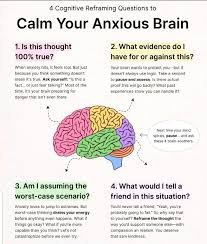
Psychological treatment for this condition often involves helping individuals reinterpret the meaning of intrusive thoughts. Rather than viewing them as dangerous signals, therapy encourages individuals to recognize them as natural byproducts of cognitive activity. Thoughts are events in consciousness, not necessarily reflections of character or intention.
Exposure-based therapeutic approaches may also be used to reduce fear associated with certain mental images or ideas. Instead of attempting to suppress unwanted thoughts, individuals gradually learn to tolerate their presence without reacting with alarm. Through repeated exposure, the emotional intensity surrounding these thoughts decreases.
Mindfulness practices contribute significantly to this process. By observing thoughts as transient mental events rather than personal threats, individuals develop a different relationship with their cognitive activity. Thoughts arise, remain briefly within awareness, and then fade, much like sounds passing through the environment.
From a broader perspective, the experience of fearing one’s own mind reveals an important truth about human consciousness: the self is not identical to the totality of mental activity. Within the complex network of thoughts, emotions, and perceptions, there exists a capacity for observation and reflection that remains distinct from the events being observed.
When individuals learn to recognize this distinction, the mind gradually becomes less threatening. Thoughts are understood as phenomena generated by cognitive processes rather than commands requiring immediate interpretation or action.
The question At what point does the mind begin to fear itself? therefore points toward a deeper philosophical insight. Fear emerges not simply from the existence of intrusive thoughts but from the interpretations attached to them. When the mind believes it must control every aspect of its own functioning, it inevitably encounters events that appear uncontrollable.
Yet when individuals accept that mental life includes spontaneity, contradiction, and unpredictability, the relationship with the mind can become more flexible. Thoughts lose their power to terrify because they are no longer treated as definitive statements about the self.
In this way, the very experience that initially produces fear may ultimately lead to a deeper understanding of consciousness. The mind discovers that it does not need to dominate every thought in order to remain stable. Instead, stability arises from the capacity to observe mental activity without becoming overwhelmed by it.
Thus, the moment when the mind begins to fear itself may also become the moment when it learns the limits of control and the possibility of psychological freedom.