Most psychiatric descriptions assume that agency—the capacity to act—and ownership—the feeling that one is the author of those actions—are inseparable. Yet a rarely articulated disturbance exists in which actions are initiated, decisions are made, and behavior remains coherent, while the subjective sense of authorship quietly disappears. This phenomenon can be described as Agency Without Ownership, a condition in which life continues to be actively lived, but no longer feels personally authored.
Individuals experiencing this state do not feel paralyzed, confused, or externally controlled. They can choose, plan, speak, and respond appropriately. However, after acting, they experience a peculiar detachment: the action feels correct, intentional, even intelligent—yet not mine in the usual sense. Patients often say, “I did it, but it didn’t feel like it came from me,” or “Things happen through me, not from me.”
This condition differs fundamentally from passivity phenomena in psychosis, where actions are attributed to external forces. In Agency Without Ownership, there is no delusional explanation and no loss of reality testing. The individual knows they are acting and does not believe anyone else is controlling them. What is missing is the felt origin of action—the pre-reflective sense that intention arises from a self.
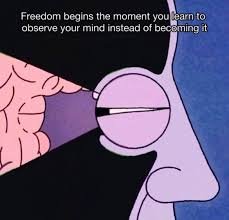
Phenomenologically, this creates a subtle but destabilizing shift in identity. The self is no longer experienced as a source, but as a point of passage. Decisions feel functionally sound but existentially hollow. Over time, individuals may report a sense of being “operational but absent,” or “present in outcomes but missing in beginnings.” Unlike depersonalization, the self does not feel unreal; it feels displaced from causality.
Neurocognitively, this state may reflect a decoupling between motor-intentional systems and self-referential integration. The brain generates intentions and executes them efficiently, but the signal that normally tags those intentions as “mine” fails to integrate. As a result, agency persists as a process, while ownership dissolves as an experience.
Clinically, this phenomenon is often overlooked because outward functioning remains intact. Patients may perform well at work, maintain relationships, and appear decisive. Their distress emerges only when they reflect on their inner experience and realize that participation feels mechanical rather than lived. Because there is no obvious impairment, clinicians may misinterpret the condition as existential questioning or emotional detachment.
Behaviorally, individuals may attempt to reclaim ownership by over-analyzing decisions, replaying actions, or forcing emotional engagement. These efforts rarely succeed and often intensify the alienation, as ownership cannot be manufactured retrospectively. Others may abandon initiative altogether, not due to lack of ability, but because action without authorship feels empty.
Therapeutic approaches are uncertain. Insight alone is insufficient, as the individual already understands the phenomenon intellectually. For some, ownership gradually re-emerges through embodied immediacy—activities that require real-time responsiveness rather than reflection. Ownership returns not when actions are examined, but when they are forgotten while happening.
Agency Without Ownership challenges a core assumption of psychology: that action naturally confirms selfhood. This condition shows that the self can persist cognitively and behaviorally while losing its felt position as origin. Mental suffering here does not arise from confusion or loss of control, but from the quiet disappearance of authorship.
It suggests that what anchors identity is not merely the ability to act, but the subtle, usually unnoticed feeling of being the one who begins. When that feeling fades, life continues—but the self becomes a spectator to its own competence.